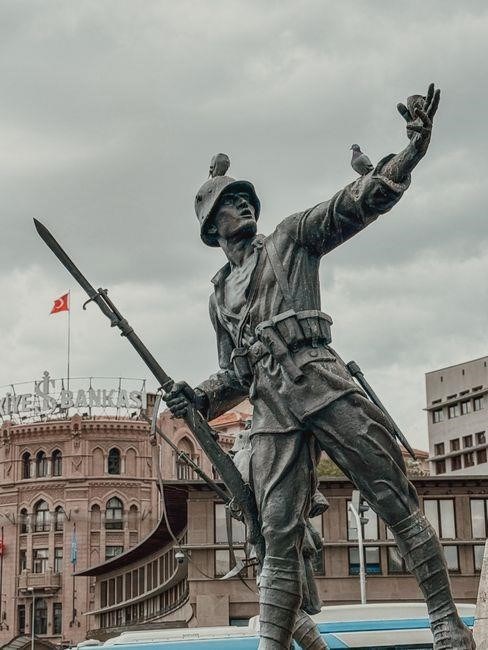
Richard Overy’s analysis in Why the Allies Won highlights industrial capacity, decisive leadership, and moral resolve as key drivers of victory. He argues that mass production, strategic unity, and ethical imperatives combined to outpace Axis forces, reshaping the war’s outcome.!!!??

Industrial Capacity and Mass Production
Industrial capacity proved decisive in the Allied triumph, as documented in Overy’s comprehensive study. The United States, Britain, and the Soviet Union each leveraged vast manufacturing networks to outstrip the Axis in quantity and quality. In the United States, the wartime economy mobilized over 12 million workers, converting automobile plants to tank and aircraft production, while the British Admiralty retooled shipyards to produce the Liberty and Victory classes. The Soviet Union’s rapid industrial relocation behind the Ural Mountains preserved critical factories from German capture, enabling a steady output of tanks and aircraft that matched the Wehrmacht’s early gains. Mass‑production techniques, such as assembly line standardization and interchangeable parts, allowed for rapid scaling of munitions, ships, and aircraft. The Allies coordinated supply chains through the Lend‑Lease program, ensuring Britain and the USSR received essential raw materials and finished goods. This logistical integration, combined with strategic allocation of resources, meant that the Allies could sustain prolonged offensives while the Axis struggled with shortages and logistical bottlenecks. Overy emphasizes that industrial might was not merely about quantity; it also involved efficient management of labor, technology, and raw materials, creating a resilient production ecosystem that could adapt to wartime demands. These combined efforts ensured that Allied forces could replace losses, upgrade equipment, and maintain operational tempo throughout the war. By 1944, Allied factories produced over 200,000 aircraft and 1.5 million tons of munitions annually, outpacing German output. This production pace enabled rapid upgrades, such as jet engines and radar, further enhancing combat effectiveness and sustained Allied advantage;

Technological Advancements and Weaponry

Overy’s analysis underscores how Allied innovation—radar, jet engines, and precision bombing—shifted the balance. British radar breakthroughs allowed early detection of Luftwaffe raids, while the U.S. developed the first operational jet, the Messerschmitt Me 262, and later the B‑29 Superfortress for strategic bombing. Soviet advances in tank design, notably the T‑34’s sloped armor and powerful 76.2 mm gun, combined with mass production, rendered German Panzer units obsolete. Allied research labs, such as Britain’s Bletchley Park, cracked Enigma, granting critical intelligence that guided tactical decisions. The integration of radar with the RAF’s night‑fighter network, the deployment of the Norden bombsight, and the use of proximity fuses in anti‑aircraft artillery exemplified the synergy between technology and doctrine. Moreover, the Allies’ focus on electronic warfare, including jamming and deception, disrupted German command and control. These technological strides, coupled with relentless R&D investment, ensured that Allied forces could outpace Axis capabilities in firepower, mobility, and situational awareness, ultimately determining the war’s outcome.
The Allies also pioneered nuclear research, culminating in the Manhattan Project, which delivered the first atomic bombs in 1945. Combined with advances in radar, radar‑guided missiles, and electronic countermeasures, these breakthroughs shifted strategic balance, forcing Germany to divert resources to counter

Coordinated Allied Strategy and Unity
Overy’s study emphasizes the unprecedented coordination among the United States, Britain, and the Soviet Union, which transformed disparate national efforts into a unified front. The 1943 Casablanca Conference formalized a common strategy, while the 1944 Allied Conference in Washington established joint operational plans. The creation of the Combined Chiefs of Staff ensured that strategic priorities—such as opening a second front in Europe and securing the Mediterranean—were synchronized across land, sea, and air forces. Intelligence sharing, exemplified by the Allies’ interception of the German Enigma code at Bletchley Park, allowed commanders to anticipate and counter Axis maneuvers. Joint procurement programs, like the Lend‑Lease Act, supplied the Soviet Union with trucks, tanks, and aircraft, while the U.S. and Britain coordinated production of the B‑24 Liberator and the Sherman tank. The Allied command structure, led by Supreme Headquarters Allied Expeditionary Force (SHAEF), integrated operations from the Normandy landings to the final push into Germany. This unity of command, coupled with shared logistical networks and synchronized supply lines, enabled the Allies to concentrate resources where most needed, maintain operational tempo, and ultimately outpace the German war machine. The Allies also established a joint logistics command that coordinated the movement of troops, equipment, and supplies across multiple theaters, ensuring that each front received timely reinforcement. Moreover, the Allies’ shared doctrine of attrition and total war, combined with the ability to mobilize civilian industries, created a relentless pressure that the Axis could not sustain. Victory. All
Overy stresses that Allied moral resolve—protecting civilians, condemning atrocities, and upholding democratic ideals—fueled public support. Propaganda, war bonds, and shared sacrifices unified citizens, sustaining resources and morale essential for victory. Their unity forged a resilient front.!!
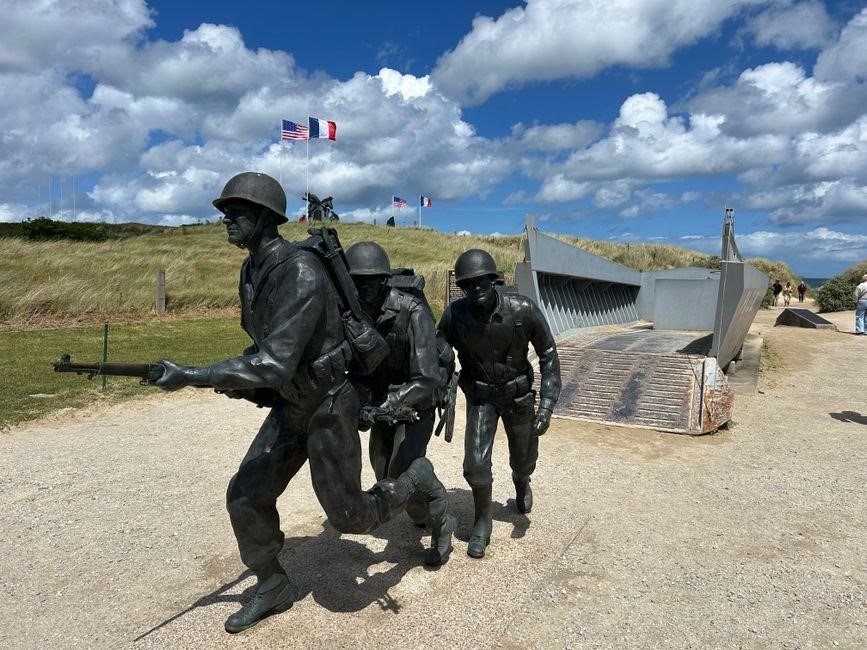
Unpredictable Victory: Strategic Turning Points
In his seminal work, Richard Overy dissects the seemingly erratic trajectory of World War II, revealing that the Allies’ ultimate triumph hinged on a series of pivotal strategic decisions that altered the war’s momentum. He identifies the Battle of Stalingrad, the Normandy landings, and the Battle of the Atlantic as turning points where Allied forces successfully leveraged industrial output, intelligence breakthroughs, and inter‑allied cooperation. Overy argues that these moments were not predetermined; instead, they emerged from adaptive leadership, technological innovation, and the relentless moral conviction that the Axis threat could be neutralized. By examining the interplay between battlefield successes and the broader socio‑economic context—such as the mobilization of civilian labor, the allocation of scarce resources, and the political will to sustain prolonged campaigns—Overy demonstrates how each turning point amplified the Allies’ capacity to outpace German logistics and morale. The book further illustrates how the Allies’ ability to learn from setbacks, reallocate resources, and maintain a unified command structure created a cumulative advantage that ultimately sealed victory. Overy’s analysis underscores that the war’s unpredictability was mitigated by a combination of strategic foresight, technological superiority, and an unwavering commitment to the moral imperatives that defined the Allied cause. The analysis remain vital!!

Little Ships and Lonely Aircraft: Naval and Air Power
Richard Overy’s study highlights how the Allies’ modest naval vessels and solitary aircraft became decisive forces in World War II. He emphasizes that the Royal Navy’s convoy escorts, often small “little ships,” safeguarded trans‑Atlantic supply lines against U‑boat threats, ensuring continuous material flow to the front. Simultaneously, the RAF’s lone fighters, such as the Spitfire and Hurricane, conducted relentless sorties over the Luftwaffe’s airfields, gradually eroding German air superiority. Overy notes that technological innovations—radar, code‑breaking, and improved aircraft engines—enabled these limited platforms to punch above their weight. The coordination between naval and air units, exemplified by the combined operations at Dunkirk and the Battle of the Atlantic, created a synergistic effect that stifled Axis logistics. Moreover, the Allies’ strategic emphasis on air power, particularly the strategic bombing campaign, disrupted German industrial output and morale. Overy argues that the cumulative impact of these “little ships” and “lonely aircraft” was a decisive shift in the balance of power, turning the tide in favor of the Allies. This nuanced perspective underscores the importance of adaptability, innovation, and relentless commitment to operational excellence in achieving victory.!!
These naval and air operations forced the Axis to divert resources, weakening their offensive and paving the way for Allied liberation of Europe for liberation!!!.
Deep War: The Battle of Stalingrad and Kursk
Richard Overy argues that the twin engagements of Stalingrad and Kursk marked the decisive pivot of the Eastern Front. He stresses that the Soviet Union’s industrial relocation to the Ural region, combined with the relentless commitment of Red Army divisions, enabled a sustained counter‑offensive that exhausted German forces. Overy notes that the Battle of Stalingrad, with its brutal urban warfare, inflicted catastrophic losses on the Wehrmacht’s 6th Army, while the subsequent Battle of Kursk showcased the effectiveness of deep‑battle tactics and the superiority of Soviet tank formations. The use of the T‑34/85, coupled with improved artillery and air support, allowed the Red Army to absorb and repel the German offensive. Overy also highlights the importance of intelligence, as Soviet code‑breaking efforts revealed German plans, enabling timely counter‑measures. These victories not only drained German manpower and materiel but also shattered the myth of German invincibility, shifting strategic initiative to the Allies. The psychological impact on both sides was profound, galvanizing Soviet morale while demoralizing the Axis. Overy concludes that the combination of industrial resilience, tactical innovation, and strategic foresight forged the path to victory on the Eastern Front, illustrating the broader theme of why the Allies ultimately prevailed.Their industrial might and tactical ingenuity paved the way for Allied triumph.

The Means to Victory: Bombers and Bombing Campaigns
Richard Overy’s study emphasizes that strategic bombing was a cornerstone of Allied success. He notes that the Royal Air Force’s Bomber Command, Avro Lancasters and Halifax aircraft, targeted German industrial hubs, transportation networks, morale‑boosting symbols. United States Army Air Forces, with B‑17 Flying Fortresses and B‑24 Liberators, extended this approach across Atlantic, crippling oil refineries, synthetic fuel plants, and naval supply lines; Overy argues that the cumulative effect of sustained daylight raids and the later shift to night‑time operations eroded Germany’s capacity to produce war materiel, while also forcing Luftwaffe to divert resources to homeland defense. He further highlights the role of intelligence, noting that code‑breaking successes at Bletchley Park and the interception of German Luftwaffe communications allowed Allied planners to anticipate and counter enemy movements. The bombing campaigns also had a psychological dimension; the relentless bombardment of cities such as Hamburg, Dresden, and Berlin sowed terror among civilian populations, undermining support for the Nazi regime. Overy contends that the combination of technological superiority, logistical coordination, and psychological pressure created a decisive advantage that the Allies could not afford to lose. This integrated approach to air power exemplifies why the Allies won, as it directly weakened the Axis’s war‑fighting capability and hastened the collapse of German resistance. 1943

Along a Good Road: The Invasion of France
Overy’s narrative frames the Normandy landings as a pivotal juncture where Allied industrial might, meticulous planning, and coordinated amphibious tactics converged. He details how the operation, codenamed Operation Overlord, relied on a massive buildup of men, materiel, and intelligence. The Allies secured air superiority through relentless bombing of German airfields, while naval forces executed a complex deception scheme—Operation Bodyguard—to mask the true landing site. The landing itself, on D‑day 6 June 1944, involved over 156,000 troops, 5,000 landing craft, and 1,200 aircraft, illustrating the scale of mass production. Overy notes that the success hinged on the seamless integration of land, sea, and air units, allowing rapid exploitation of beachheads and swift penetration into occupied France. He also highlights the crucial role of logistics: the establishment of temporary ports (Mulberry harbours) and the rapid construction of supply lines ensured continuous reinforcement. The operation’s triumph not only liberated Paris but also forced Germany to divert resources from the Eastern Front, contributing to the eventual collapse of the Third Reich. Overy’s analysis underscores that the invasion was a culmination of Allied unity, industrial capacity, and strategic ingenuity, solidifying why the Allies won.
Meticulous coordination of logistics, air, sea, and ground forces exemplified strategic mastery, cementing their triumph now.
A Genius for Mass-Production: Economies at War
Overy’s study emphasizes that the Allied war effort was sustained by an unprecedented scale of industrial output. The United States, Britain, and the Soviet Union mobilized entire economies, converting civilian factories into munitions plants, expanding steel production, and streamlining supply chains. This mass‑production engine produced millions of tanks, aircraft, and ships, outpacing German capabilities. The book cites specific figures: by 1944, the U.S. alone supplied 70% of Allied aircraft, while Britain’s shipyards delivered over 1,000 warships. The Soviet Union’s rapid re‑equipping of front‑line units after Stalingrad showcased a similar industrial surge. Overy argues that this capacity allowed the Allies to absorb losses, maintain continuous offensives, and launch simultaneous campaigns across multiple fronts. Moreover, the coordination between governments, industry, and the military created a feedback loop where technological innovation—such as radar and jet engines—was rapidly integrated into production lines. The result was a strategic advantage that could not be matched by the Axis, whose industrial base was fragmented and limited by resource shortages. Thus, the “genius” of mass‑production became a decisive factor in the Allied victory as it translated economic might into battlefield superiority. This synthesis of economic might and coordinated war underscores why the Allies industrial genius translated into decisive victory.

A War of Engines: Technology and Military Power
Overy’s analysis in the PDF highlights how Allied technological innovation—radar, jet engines, and precision bombing—transformed combat. The United States invested heavily in radar, enabling early warning and night‑time strikes that crippled Luftwaffe operations. Britain’s development of the Avro Lancaster and the de Havilland Mosquito introduced high altitude bombing, while the US B‑29 Superfortress delivered firepower over Japan. German advances, such as the V‑2 rocket, were countered by Allied intelligence and counter‑measures, illustrating the cat‑and‑mouse game of technology. The Soviet Union’s rapid adoption of the Ilyushin Il‑2 ground‑attack aircraft and the T-34 tank, combined with mass production, provided a technological edge on the Eastern Front. Overy notes that the Allies’ ability to field more advanced engines—such as the Rolls‑Royce Merlin and the Pratt & Whitney R-2800—gave aircraft superior range and payload; Moreover, the Allies’ focus on electronics, cryptography, and code‑breaking (e.g., Bletchley Park) allowed them to anticipate enemy plans. These technological gains, coupled with coordinated logistics, enabled sustained offensives across Europe, the Mediterranean and the Pacific, ultimately tipping the balance of power. The PDF’s detailed tables show production figures, deployment timelines, and comparative performance metrics, underscoring how engineering excellence became a decisive factor in the Allied triumph.
Impossible Unity: Allies and Leaders in War
In the PDF, Overy emphasizes that the Allied victory hinged on unprecedented cooperation among diverse nations, each contributing unique strengths. The United States supplied vast industrial output, Britain offered strategic air power, the Soviet Union delivered massive ground forces, and Canada and Australia provided critical naval and air units. Leadership coordination—through the Combined Chiefs of Staff, the Supreme Headquarters Allied Expeditionary Force, and the Inter‑Services Conference—ensured that strategic objectives remained aligned despite cultural differences. Overy cites the 1943 Casablanca Conference, where Roosevelt, Churchill, and de Gaulle agreed on a coordinated strategy, and the 1944 Tehran talks that solidified the Eastern Front’s role. The PDF details how joint operations, such as the Normandy landings, required meticulous planning across multiple command structures, and how intelligence sharing (e.g., the Ultra program) unified efforts. This unity also extended to logistics: the Lend‑Lease program transferred critical supplies from the U.S. to Britain and the USSR, while the Allies established a common supply chain for ammunition, fuel, and materiel. Overy argues that without this cohesive framework, the war would have prolonged, allowing Germany to consolidate gains. The PDF concludes that the Allied leaders’ willingness to compromise, share resources, and maintain a shared vision of victory was the decisive factor that turned the tide of World War II. The PDF also examines the role of diplomatic negotiations, noting that the Allies’ ability to maintain a united front against Axis expansion was reinforced by shared political goals and mutual trust. It highlights the importance of cultural exchange programs, joint training exercises, and the establishment of unified command protocols that minimized friction and maximized operational efficiency. By fostering a sense of collective purpose, the Allies created a resilient coalition capable of adapting to evolving battlefield conditions. The PDF further illustrates how the Allies leveraged shared intelligence networks, such as the Allied Intelligence Bureau, to anticipate German maneuvers and coordinate counter‑offensives; It underscores that this collaborative intelligence culture was a cornerstone of Allied success, enabling timely decisions that outpaced Axis strategic planning and maintained operational cohesion throughout the war.
Evil Things, Excellent Things: The Moral Contest
In the PDF, Overy frames the Allied triumph as a moral struggle against the Nazi regime’s atrocities. He argues that the Allies’ commitment to human rights, democratic ideals, and the defense of civilian populations galvanized global support. The document cites the 1942 “Appeal to the World” by Roosevelt and Churchill, which framed the war as a fight for freedom, and the 1945 “United Nations Charter” that institutionalized post‑war moral order. Overy emphasizes that moral clarity enabled the Allies to secure resources from neutral countries, as leaders could justify aid by appealing to shared ethical values. The PDF also highlights the role of propaganda, noting how films, radio broadcasts, and leaflets portrayed the enemy as barbaric, thereby sustaining domestic morale. It discusses the moral calculus of strategic bombing, arguing that while the Allies faced criticism for civilian casualties, they justified the campaigns as necessary to cripple Germany’s war‑making capacity. The text further examines the moral responsibility of the Soviet Union, noting that its brutal tactics were portrayed as a necessary response to fascist aggression. Overy concludes that the moral dimension was not merely rhetorical; it translated into tangible political and economic support, reinforcing the coalition’s resilience. The PDF stresses that the Allies’ moral narrative helped maintain unity among diverse nations, ensuring that the coalition remained focused on a shared vision of a post‑war world built on justice and peace.