Club Car ERIC Charger Manual: Troubleshooting & Maintenance
Navigating common Club Car ERIC charger issues, like abort modes or failing recognition, requires diligent troubleshooting and proactive battery upkeep for optimal performance.
The Club Car ERIC (Electronic Ride-Control Intelligence Charger) represents a significant advancement in golf cart battery charging technology. Introduced to enhance charging efficiency and battery lifespan, the ERIC charger is a sophisticated system utilized in many Club Car models, particularly the Precedent series. Unlike older, simpler chargers, the ERIC charger actively monitors battery conditions throughout the charging cycle, adjusting its output to optimize performance and prevent overcharging.
Understanding the ERIC charger’s functionality is crucial for any Club Car owner. Common issues, such as the charger failing to recognize the battery or entering abort mode, often stem from simple problems like loose connections or require a deeper dive into the charger’s internal components. This manual aims to provide a comprehensive guide to troubleshooting, maintenance, and understanding the intricacies of your Club Car ERIC charger, ensuring years of reliable service.
Understanding ERIC Charger Indicators
The Club Car ERIC charger utilizes a series of indicator lights to communicate its operational status and any potential issues. These lights provide vital clues for diagnosing charging problems. A solid green light typically signifies a normal charging cycle is in progress, indicating the charger is successfully delivering power to the battery. However, a flashing green light can indicate a fault or an interruption in the charging process.
A yellow triangle indicator often signals a problem with the battery or charging circuit, requiring further investigation. The charger may enter abort mode, halting the charging process, if it detects a significant issue. Correctly interpreting these indicators is the first step in effective troubleshooting. Verification of a completed charge cycle is confirmed by observing the status indicator lights.

Common Club Car ERIC Charger Issues
Several recurring problems plague Club Car ERIC chargers, often causing frustration for owners. A frequent complaint is the charger failing to recognize the battery, preventing any charging from occurring. This can stem from poor connections or a faulty charger circuit. Another common issue is the charger entering abort mode mid-cycle, leaving the battery partially charged. This often indicates a problem with the battery itself, or a disruption in the power supply.
The appearance of a yellow triangle indicator light is also a widespread concern, signaling a potential fault. Many users report these issues with 2014-2016 models. Addressing these problems promptly is crucial to maintaining optimal battery health and preventing downtime. Owners often find themselves needing to reboot the charger or test its output.
Charger Not Recognizing Battery
When your Club Car ERIC charger fails to recognize the battery, several factors could be at play. A primary suspect is often a loose or corroded connection within the charge cable or at the battery terminals. Thoroughly inspect these points, ensuring a clean and secure fit. The issue can also arise from a depleted battery – if the voltage is too low, the charger may not initiate a charge cycle.
Internal charger faults, such as a failing circuit board, can also prevent recognition. Before assuming a major issue, attempt a charger reboot by disconnecting and reconnecting the power supply. If the problem persists, carefully check the wiring where the charge cable connects to the charger itself, verifying proper connections. Low battery voltage is a common cause, so ensure sufficient initial charge.
Charger Entering Abort Mode
The dreaded abort mode on a Club Car ERIC charger signals an interruption during the charging process. This frequently indicates a problem with the battery itself – potentially a sulfated battery or a failing cell. However, it doesn’t always point to the battery; inconsistent power supply or a faulty charger component can also trigger this mode.
Begin by verifying the battery’s condition and ensuring it’s receiving a consistent voltage. A reboot of the charger, achieved by disconnecting and reconnecting the power, is a simple first step. If the issue continues, a multimeter test of the charger’s output is crucial to determine if it’s delivering the correct voltage. Internal charger board failures are also a possibility, requiring professional diagnosis or component replacement.
Yellow Triangle Indicator Light

A yellow triangle illuminated on your Club Car ERIC charger typically signifies a communication issue between the charger and the battery management system. This often arises from a low battery state, preventing the charger from initiating a proper charge cycle. However, it can also indicate a problem with the battery pack’s internal connections or a faulty battery itself.
Before assuming a battery failure, ensure the cart has been ridden recently to activate the battery management system. Check the cable connections between the charger and the battery pack for corrosion or looseness. A full charge attempt after a reboot of the charger might resolve the issue. If the triangle persists, further investigation, including voltage testing and potentially a battery load test, is necessary to pinpoint the root cause.
Troubleshooting Steps for ERIC Chargers
When facing issues with your Club Car ERIC charger, a systematic approach is crucial. Begin by verifying all cable connections – both at the charger and the battery pack – ensuring they are clean and secure. A simple reboot, achieved by disconnecting and reconnecting the power supply, can often resolve minor glitches. If the problem persists, utilize a multimeter to test the charger’s output voltage, confirming it aligns with the specified range for your battery type.
Further diagnostics may involve inspecting the charger’s internal components for any visible damage. Remember to prioritize safety and disconnect power before any internal inspection. If these steps fail to identify the issue, consider consulting a qualified golf cart technician for more advanced troubleshooting.
Checking Cable Connections
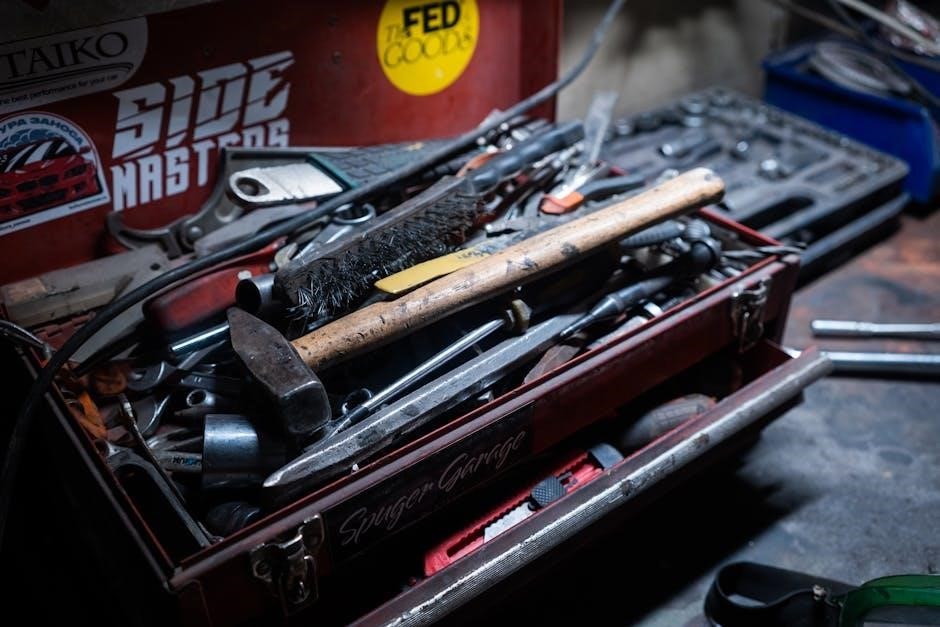
A primary step in ERIC charger troubleshooting involves meticulously examining all cable connections. Begin at the charge receptacle on the golf cart, ensuring the connector is fully seated and free from corrosion. Next, inspect the cable running from the cart to the charger itself, looking for any signs of damage, fraying, or loose connections. Pay close attention to the terminals where the cable connects to the charger; these should be clean and tightly secured.
Loose or corroded connections can significantly impede charging efficiency. Gently wiggle each connection to confirm its firmness. If corrosion is present, carefully clean the terminals with a wire brush or appropriate cleaning solution before reconnecting. A secure and clean connection is vital for proper charging.
Rebooting the Charger
When encountering ERIC charger malfunctions, a simple reboot can often resolve minor software glitches. This process effectively restarts the charger’s internal systems, potentially clearing temporary errors that may be causing issues. To reboot, completely disconnect the charger from both the AC power source and the golf cart’s battery. Allow at least 30 seconds to elapse – this ensures any residual power is fully discharged.
After the waiting period, reconnect the charger to the AC power first, then to the golf cart battery. Observe the indicator lights; the charger should initiate its normal startup sequence. If the reboot successfully clears the error, the charger will begin the charging cycle. If the problem persists, further troubleshooting steps are necessary.
Testing Charger Output with a Multimeter
Employing a multimeter is crucial for verifying the ERIC charger’s functionality when troubleshooting. First, ensure the charger is connected to both AC power and the golf cart battery, but not actively charging (if it’s in an error state). Set your multimeter to DC voltage mode, selecting a range appropriate for the expected output – typically around 48-56 volts for a 36/48V system.
Carefully probe the charger’s output terminals (positive and negative) with the multimeter leads. A healthy charger should display a voltage within the specified range. Significantly lower or absent voltage indicates a faulty charger requiring further inspection or component replacement. Always exercise caution when working with electrical components.
ERIC Charger Component Overview
The Club Car ERIC charger comprises several key components working in unison. The primary elements include the transformer, responsible for stepping down AC voltage; the rectifier, converting AC to DC; and the control board, the ‘brain’ managing the charging process and monitoring battery status. Further, a charge cable connects the charger to the battery, and various indicator lights display charging progress and potential faults.
Internal components like capacitors, resistors, and diodes are vital for regulating voltage and current. The heat sink dissipates heat generated during operation, ensuring longevity. Understanding these components aids in diagnosing issues – a faulty control board often manifests as abort modes or incorrect indicator behavior.
Replacing Faulty Charger Boards
Replacing the control board within a Club Car ERIC charger requires careful procedure. First, disconnect the charger from both the AC power source and the battery. Document the wiring connections before removal – photographs are highly recommended! Carefully remove the charger casing, typically secured with screws. Disconnect all wiring harnesses from the old board, noting their positions.
Install the new board, ensuring all connections are secure and correctly oriented. Double-check wiring against your documentation. Reassemble the charger casing and perform a preliminary test, observing the indicator lights. If the charger still malfunctions, revisit wiring connections and consult a schematic. Always prioritize safety and consider professional assistance if unsure.
Battery Maintenance for Optimal Charging
Maintaining your Club Car’s battery is crucial for efficient ERIC charger operation. Regularly check battery voltage using a multimeter; a fully charged 12-volt battery should read around 12.6-12.8 volts. Low voltage can trigger charger errors. Clean battery terminals with a baking soda and water solution to remove corrosion, ensuring a solid electrical connection.

Inspect for any signs of damage, such as cracks or bulging. Equalize the charge periodically, allowing the charger to run a full cycle even after seemingly complete. Proper water levels (for flooded lead-acid batteries) are essential; use distilled water only. Neglecting battery maintenance significantly reduces charging efficiency and shortens battery lifespan, leading to frequent charger issues.
Checking Battery Voltage
Accurate battery voltage readings are fundamental for diagnosing ERIC charger problems. Utilize a digital multimeter set to DC voltage, typically the 20V scale. With the battery disconnected from the charger, place the multimeter probes on the battery terminals – red to positive (+), black to negative (-). A fully charged 12-volt battery should display 12.6 to 12.8 volts.
Readings below 12.4 volts indicate a partial charge, while below 12.0 volts suggests a significantly discharged battery. Low voltage can cause the charger to enter abort mode or fail to recognize the battery. Record the voltage before and after charging to assess battery health and charging efficiency. Consistent low readings point to a failing battery needing replacement.
Cleaning Battery Terminals
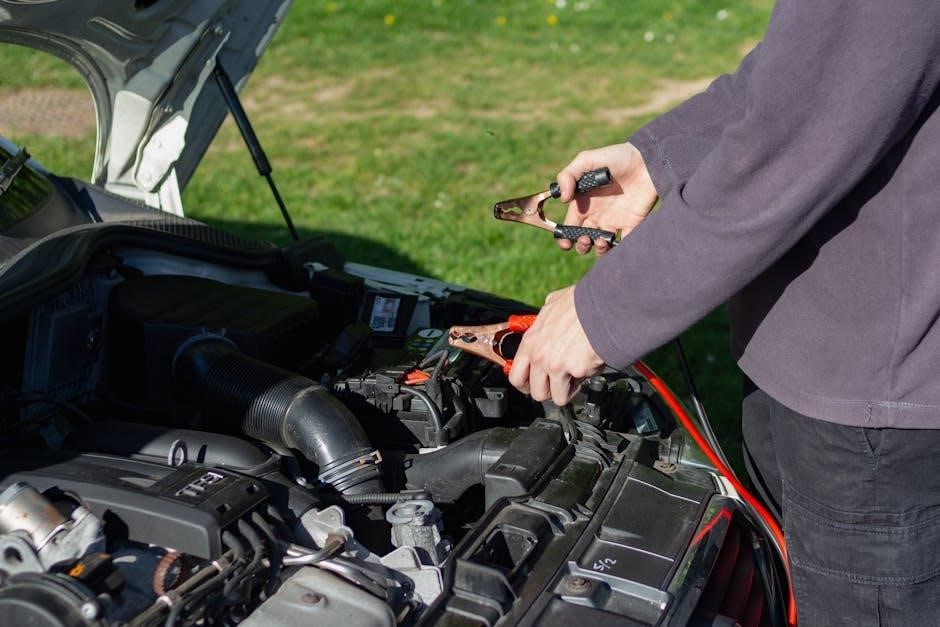
Corroded battery terminals significantly impede the charging process and can trigger ERIC charger errors. Disconnect the battery cables – always negative first – before commencing cleaning. Prepare a solution of baking soda and water, creating a paste. Apply this paste liberally to the terminals, allowing it to fizz and neutralize corrosion.
Use a wire brush or terminal cleaning tool to scrub away the corrosion, ensuring a bright, clean metal surface. Rinse thoroughly with water and dry completely. Reconnect the cables, positive first, ensuring a tight and secure connection. Clean terminals facilitate optimal current flow, preventing charger aborts and ensuring efficient charging. Regular cleaning is a vital preventative measure.
ERIC Charger Wiring Diagrams
Understanding the ERIC charger’s wiring is crucial for safe and effective troubleshooting or component replacement. Diagrams illustrate the connections between the AC input, DC output, control board, and various sensors. These schematics detail wire colors, pin assignments, and voltage levels at different points in the circuit.
Accessing accurate wiring diagrams is essential; refer to the Club Car technical manual specific to your charger model. Incorrect wiring can lead to charger malfunction, battery damage, or even electrical hazards. Diagrams aid in identifying faulty wires, connectors, or components. Always disconnect power before working with wiring, and double-check connections against the diagram before restoring power.
Safety Precautions When Working with ERIC Chargers
Prioritizing safety is paramount when servicing Club Car ERIC chargers. Always disconnect the AC power supply before opening the charger or handling any internal components. These chargers deal with potentially lethal voltages, even when seemingly inactive. Wear appropriate personal protective equipment (PPE), including insulated gloves and eye protection.
Never work on a wet or damp surface. Avoid touching any exposed wiring or connectors. Be mindful of stored energy in capacitors, which can retain a charge even after power is removed. If you are unfamiliar with electrical work, consult a qualified technician. Improper handling can result in severe electric shock or damage to the charger and connected batteries.
ERIC Charger Specifications & Models
Club Car ERIC (Efficient, Reliable, Intelligent Charger) models vary based on the year and golf cart series. Common voltage outputs include 36V and 48V, designed to accommodate different battery pack configurations; Input voltage typically operates on standard 120V AC or 240V AC, depending on the regional standard.
Charging amperage ranges from 13-18 amps, influencing charge times. Newer models incorporate advanced diagnostic features and communication protocols. Identifying your specific ERIC charger model is crucial for sourcing correct replacement parts and accessing tailored troubleshooting guides. Model numbers are usually found on a label affixed to the charger’s casing. Understanding these specifications ensures compatibility and optimal charging performance.
Finding Replacement ERIC Charger Parts
Sourcing replacement parts for your Club Car ERIC charger requires identifying the specific model number. Authorized Club Car dealers are the primary source for genuine components, ensuring compatibility and quality. Online retailers specializing in golf cart parts also offer a wide selection, often at competitive prices.
Commonly replaced parts include rectifier boards, transformers, and charging connectors. When purchasing, verify the part number matches your charger’s specifications. Consider the warranty offered by the supplier. Used parts can be a cost-effective option, but their condition should be carefully assessed. Always prioritize safety and consult a qualified technician if unsure about installation.
Preventative Maintenance Schedule
Establishing a routine maintenance schedule extends the lifespan of your Club Car ERIC charger. Monthly, inspect all cable connections for corrosion or damage, cleaning as needed. Every six months, visually examine the charger’s internal components for signs of overheating or wear. Annually, test the charger’s output voltage with a multimeter to ensure it’s within specifications.
Regularly cleaning the charger’s exterior prevents dust buildup, which can impede cooling. Keep the area around the charger well-ventilated. Document all maintenance performed. Proactive care minimizes the risk of unexpected failures and ensures consistent, reliable charging performance for your golf cart batteries, saving on potential repair costs.
Resources for Club Car ERIC Charger Information
Accessing reliable information is crucial for Club Car ERIC charger maintenance. The official Club Car website provides detailed manuals and frequently asked questions. Online golf cart forums, such as those dedicated to Club Car precedent models, offer valuable troubleshooting tips from experienced owners. YouTube channels specializing in golf cart repair often feature videos demonstrating charger diagnostics and repair procedures.
Additionally, authorized Club Car dealers can provide expert assistance and genuine replacement parts. Websites specializing in golf cart parts also offer a wide selection of components and technical support. Remember to verify the credibility of online sources before implementing any suggested repairs or modifications. Prioritize official documentation whenever possible.